name, year

Zadkine Fashion Experiment

walkops, extension privaat opdrachtgeverschap, realized 2005, residential

Summa Fashion Biënnale

rap, privaat opdrachtgeverschap, competition, residential

pillerseetal seniors, fieberbrunn, senior housing, 2008, architecture

moerkerke medicare, Moerkerke, health care, 2008, renovation

Millinx 2 – Thuishaven Charlois, Rotterdam, housing, social care

millinx, Rotterdam, housing, healthcare, realized 2004, architecture, reconversion

kleine duizendpoot, rotterdam, kindergarten, 2010

hol(e)iday house

het Buro & de Bovenkamer, housing and office space, in progress

gia, Northern Ireland, tourism, competition, architecture

cascade, Amsterdam, housing, study, 2000, architecture

Beauty&Design Lab

Bandung Block Restructuring, urban renewal

the green corner, Purmerend, daycare center, ongoing, architecture

restructuring post-war housing, housing, 2002, research

maaspavilion, rotterdam, visitor center, 2006, architecture

lex waterfront, Walsall, United Kingdom, housing, conference centre, hotel, 2008, urban planning, competition

kemi waterfront, Kemi, 2005, architecture, urban planning, competition

hoogvliet, Rotterdam, housing, 2005, architecture, research, design

holiday Park, Eiffel, Germany, holidaypark, ongoing, architecture, urban planning

heesterveld dwellandscape, Amsterdam, housing, 2006, architecture, urban planning, competition

filterbuildings, Rotterdam, housing, realized 2008, renovation, study

erasmus apartments, rotterdam, apartment building, 2006, architecture, com.wonen

elemental, chile, housing, competition, architecture, urban planning

dwell landscape Bandung

deep urbanity- the (w)hole block, dordrecht, architecture

de margriet, rotterdam, elementary school, 2004, reconversion

conference domes, Budapest, conference center, 2002, architecture, competition

brewinc culture cluster, Doetinchem, housing, cultural facilities, 2007, urban planning, architecture, tender

bloemhof brede school, rotterdam, Primary school, competition, architecture, 2008

valer church, valer, church, competition, architecture

Social Quality Strategy Gillis Neighborhood

Sandwich Residential Tower, Rotterdam, housing

Louwal low energy town house, Rotterdam, privaat opdrachtgeverschap

Krill featered in Art Calendar

ko black garden, Rotterdam, garden privaat opdrachtgeverschap, realized, 2006

Indonesian Embassy The Hague
Inajur wooden terraced house

House-in-the-Shed 2

house in a shed, Rotterdam, privaat opdrachtgeverschap, 2001, architecture, competition

Goudse Hoofd -shortlisted for the Plan Award 2017, Rotterdam, housing

gardenHouse Meister, Rotterdam, privaat opdrachtgeverschap, realized, architecture

deep urbanity – the (w)hole house, privaat opdrachtgeverschap

Bird watching promenade

Indonesian Embassy The Hague

  • Design: Krill o.r.c.a. + SHAU
  • Design team: Harmen van de Wal, Daliana Suryawinata, Florian Heinzelmann, met Putin Anggita, Antonia Dayak, Muhammad Ichsan, Marketa Kvardova, Rizky Supratman, Vera Tamburlin
  • Client: Embassy of the Republic of Indonesia
  • Contractor: Meerbouw Rotterdam
  • Constructive engineer: Kkonstrukties
  • Area: 270m2
  • Start design: June 2017
  • Realization: April 2018
  • Photographer: Frans Parthesius
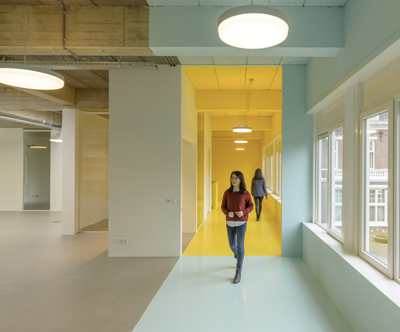
  • Krill and SHAU –architecture firms based respectively in The Netherlands and Indonesia – were appointed to redesign the whole consular section of the Embassy of the Republic of Indonesia. The project is in more than one way a marriage of Dutch-Indonesian building and combines the brute, urban elements of a Dutch building from the sixties with a contemporary, light ambiance and references to Indonesian crafts and spatiality. The inversion of public to the outside and private to the inside, the ‘dalam’ (Indonesian word for ‘inside’) is similar to what can be found in Javanese and Sumatran traditional houses, where the dark inside is the most valued, most private space, and the building dissolves in a veranda towards the exterior.

    A continuous circulation path along the exterior walls was envisioned to allow a maximum of daylight to enter the space. 40% of this path is accessible to the public, while the other 60% is the private office, only accessible for the embassy staff. Two colors are chosen: sky blue for the back-office zone and bright yellow – a noticeable, optimistic color which stimulates clear thinking, and brings to mind the tropical suns of Indonesia for the public zone. In the middle, closed in by the circulation path, the spaces were left without color, while brute concrete, clearly showing the wood grain of the casting, was made visible in the beams and columns.